















What You Need to Know: Preconstruction decisions don't fail because teams get them wrong - they fail because the data behind decisions doesn't survive the journey from concept through GMP. When data fractures through exports, context disappears, and assumptions get lost, teams can't answer "why did we decide this was the right number?" A true system of record maintains data continuity, enabling institutional learning instead of resetting knowledge with every project.
The Real Issue: Broken Data Continuity
Most preconstruction decisions don't fail because the team got it wrong. They fail because the data behind the decision doesn't survive the journey.
From concept through GMP, preconstruction data fractures. Numbers change, context disappears, assumptions get lost, and suddenly no one can answer a simple question: "Why did we decide this was the right number?" In construction, where margins are thin and decisions are irreversible, that lack of continuity is costly.
For years, preconstruction tools competed on features: faster takeoff, better assemblies, cleaner reports. Those things still matter - but they're no longer enough. Today's preconstruction leaders are being asked harder questions: Are we getting more accurate over time? Which decisions consistently create risk? Do our early assumptions survive into construction? How does estimating performance connect to win rate and margin?
Those questions can't be answered by a single estimate or a static report. They require something the industry has historically lacked: a real system of record for preconstruction.
Most tools force an unspoken tradeoff: use the built-in reports, or export data and rebuild the story somewhere else. The moment data is exported, governance weakens, context disappears, and history fragments. Teams spend more time reconciling numbers than learning from them.
Preconstruction doesn't need more reports. It needs a durable, trustworthy data foundation that connects decisions over time.
What a True Preconstruction Data Foundation Looks Like
A modern preconstruction platform should do three things simultaneously: continuously capture reality as work happens, remain stable as workflows and teams evolve, and stay open to the rest of the business.
Continuously capture reality as work happens. No batch jobs. No scheduled exports. No "snapshot" thinking. When an estimator makes a decision - adjusting a quantity, selecting an assembly, documenting an assumption - the system records it immediately with full context. Decision history accumulates naturally through daily work rather than requiring separate documentation effort.
Remain stable as workflows and teams evolve. Insights built today shouldn't break next year. As organizations grow, processes change, and teams adopt new workflows, the underlying data foundation should accommodate evolution without forcing migration or losing historical continuity. The knowledge built over five years of completed projects remains accessible and comparable even as the business transforms.
Stay open to the rest of the business. Preconstruction data isn't just for estimators - it informs design, scope, and risk externally while impacting finance, operations, strategy, and leadership internally. Closed systems that lock data inside preconstruction tools prevent the cross-functional analysis that drives strategic insight. Open foundations enable integration with enterprise systems where preconstruction intelligence influences broader business decisions.
That combination is rare. But it's becoming essential for firms treating preconstruction as strategic capability rather than transactional function.
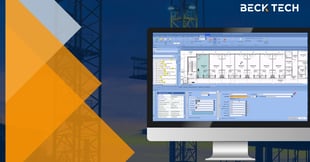
DESTINI Estimator was built on this foundation. Data captures continuously as estimators work - no separate "save to database" step required. The platform's architecture remains stable even as Beck Technology adds capabilities and customers evolve workflows. And openness enables integration with analytics platforms, ERP systems, and business intelligence tools where preconstruction data combines with financial, operational, and market intelligence.
Learn how DESTINI Estimator preserves data continuity →
From Estimating Data to Institutional Learning
When preconstruction data is captured continuously, governed properly, and made accessible, something important happens: estimates stop being one-off artifacts. They become organized experience.
Teams can finally trace decisions from concept to construction, understand variance instead of just reporting it, see patterns across projects, markets, and time, and build insights that compound instead of resetting every job. This is how preconstruction moves from estimating projects to developing institutional learning.
Consider the typical scenario without data continuity. An estimator prices concrete work on a healthcare project. Six months later, actual costs come in 12% over estimate. The project team discusses what happened, perhaps capturing lessons in a post-project memo. But that learning doesn't automatically inform the next healthcare estimate. The knowledge remains trapped in meeting notes and individual memory rather than becoming organizational intelligence.
With continuous data capture, the story changes. The system connects estimated costs to actual outcomes automatically. Analysis reveals the variance pattern: healthcare projects in urban locations with congested sites consistently run higher than suburban healthcare. The productivity assumptions in the cost database update based on this pattern. Future healthcare estimates in similar conditions automatically reflect this learning. Knowledge compounds rather than fragmenting.
This shift from transactional estimating to institutional learning transforms preconstruction's value proposition. Rather than simply producing numbers for individual projects, the function builds competitive intelligence that strengthens with every completed job.
Openness Is a Strategic Decision
Closed systems feel simpler in the short term. They're also why so many firms rebuild the same analytics every few years. When preconstruction data locks inside proprietary formats without export capabilities or API access, firms face an impossible choice: live with the vendor's limited analytics, or abandon the historical data when adopting new tools.
An open data foundation allows organizations to start simple with built-in insights, extend analytics as maturity grows, integrate preconstruction data with the rest of the enterprise, and evolve without replatforming or losing history.
That flexibility means firms can future-proof decision-making. As analytics capabilities advance and as business intelligence platforms become more sophisticated, firms with open preconstruction data can leverage these improvements immediately. Those with locked data must wait for vendors to implement features or face complex migration projects.
Consider a firm that wants to correlate estimating accuracy with project profitability, analyzing whether certain project types, owners, or delivery methods consistently produce better outcomes. If preconstruction data lives in a closed system, this analysis requires manual export, transformation, and reconciliation with financial data. If the foundation is open, the analysis connects data sources directly through standard integration methods.
DESTINI Estimator's open architecture enables this flexibility. Preconstruction data exports in standard formats. APIs allow integration with business intelligence platforms like PowerBI, Tableau, and custom analytics environments. Firms can leverage Beck Technology's built-in reporting while simultaneously building custom analytics that combine preconstruction intelligence with financial, operational, and market data from across the enterprise.
The Change Is Already Here
The most forward-thinking GC/CMs are no longer asking "What reports does this tool give me?" They're asking,"Will the decisions we make today still make sense three years from now?"
That's a fundamentally different standard. It recognizes that preconstruction's real value is in producing decisions that stand up over time.
This evolution reflects broader maturation in how construction firms approach technology. Early software adoption focused on digitizing manual processes: replace paper takeoff with digital measurement, replace spreadsheets with estimating platforms, replace filing cabinets with document management. Those improvements delivered efficiency but didn't fundamentally change decision-making.
The next wave treats data as a strategic asset. Firms recognize that the intelligence accumulated through hundreds of estimates, thousands of subcontractor relationships, and decades of project outcomes represents competitive advantage - if that intelligence remains accessible and analyzable rather than fragmenting across disconnected tools and lost exports.
This perspective changes evaluation criteria for preconstruction platforms. Features still matter, but data governance, continuity, and openness become equally important.
Building Systems Where Insight Survives the Journey
Preconstruction data shouldn't disappear the moment an estimate is approved. It should become part of the firm's memory. The companies that win in the next decade will be the ones that treat preconstruction data as a long-term strategic asset and build systems that let insight survive the journey.
This requires rethinking how preconstruction technology integrates into broader business operations. Rather than treating estimating software as a standalone tool used by specialists, leading firms position it as a critical data source feeding enterprise intelligence. Preconstruction decisions inform risk assessment, financial forecasting, strategic planning, and competitive positioning - but only if the underlying data remains accessible, trustworthy, and connected to outcomes.
DESTINI Estimator serves this expanded role. The platform captures the detailed decision context that explains not just what was estimated but why. Visual connections to drawings preserve the scope understanding that drove quantities. Assembly selections carry forward the reasoning behind cost assumptions. Change history documents how estimates evolved through design iterations. This rich context - combined with open architecture enabling integration with enterprise systems - transforms preconstruction from a number-producing function into an intelligence-generating capability.
Experience preconstruction data that survives:
See how DESTINI Estimator maintains data continuity from concept through construction, enabling institutional learning instead of project-by-project knowledge reset.
Learn More About DESTINI Estimator →
Explore how continuous data capture, stable architecture, and open integration preserve preconstruction intelligence as a strategic asset.